Material innovation underpins the sustainable development of products. Handa Industries keeps increasing investment in the R&D of sustainable materials, and has systematically built a three major R&D systems covering recycled materials, bio-based materials and functional eco-friendly materials.
For recycled materials, we focus on developing high-value utilization technologies for post-consumer recycled plastics and waste textiles. For bio-based materials, we develop new eco-friendly raw materials derived from plant resources such as crop straw and seaweed. As for functional eco-friendly materials, we promote the application and implementation of high-performance green materials featuring biodegradability, low VOC emissions and low carbon footprint.
Meanwhile, the company has established a collaboration mechanism linking material R&D with product design, manufacturing and supply chain management, accelerating the transformation of sustainable materials from laboratory research to mass production.
Through continuous material innovation and systematic deployment, we steadily reduce the environmental footprint across the product lifecycle and drive the sustainable upgrading of products from source to end user.
| Material Category | Representative products | Environmental benefits |
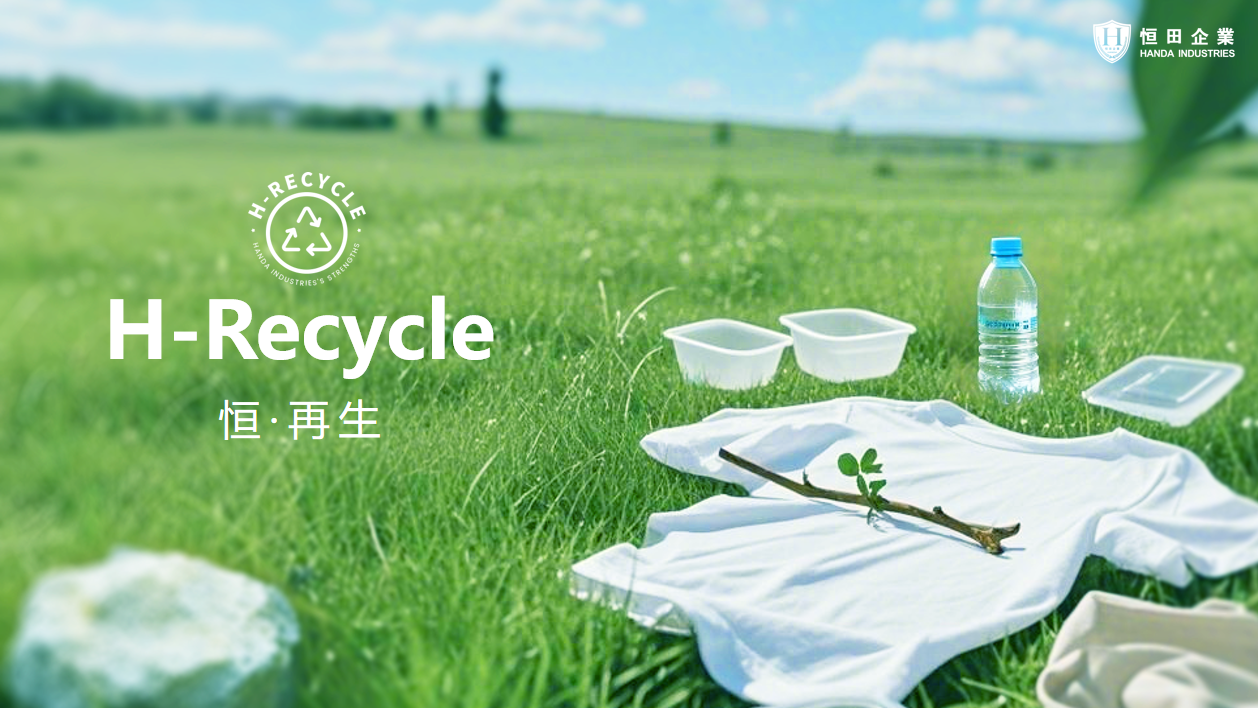
| Recycled materials | Recycled polypropylene fabric, recycled polyester fabric | The developed eco-friendly T-shirts are made from recycled waste polypropylene containers and PET beverage bottles. Compared to traditional production methods, carbon emissions are significantly reduced. |
| Bio-based materials | Bio-based polyamide fabrics, polylactic acid (PLA) fabrics, Lyocell cellulose fabrics | Made from renewable biomaterials such as corn and straw, the product is biodegradable. |
| Functional and environmentally friendly materials | Fluorine-free waterproof fabric, antibacterial and biodegradable fabric, temperature-regulating and environmentally friendly fabric | While ensuring product functionality, significantly reduce environmental impact. |
Hengnuo Technology showcases its products at the 2025 Shanghai Apparel Fabrics & Accessories Autumn/Winter Exhibition
In September 2025, Wuxi Hengnuo Textile Technology Co., Ltd., a subsidiary of Handa Industries, participated in the China International Textile Fabrics and Accessories (Autumn/Winter) Expo, setting up a booth in the International Pavilion. The exhibition focused on three themes: "Fashion, Technology, and Green," showcasing products including textured fabrics, jacquard series, nylon high-elastic fabrics, super quick-drying fabrics, nylon-spandex jacquard cool-feel fabrics, and carbon-recycled series. Among these, the carbon-recycled series utilizes the recycled carbon dioxide generated during the production process to create negative carbon polyester.
During the exhibition, the president of the China National Textile and Apparel Council visited the Hengnuo booth and exchanged views with the company's leaders on industry trends and technological innovation.,The business team provides product explanations and customized solutions to global clients.
This exhibition fully demonstrated Handa's core competitiveness in fashion design, technological innovation and green sustainability, further broadened its international cooperation channels and enhanced the company's influence.
-d6c11c868fba465baa9176d8436c9e46.jpg)
-822f90221f6f4353bd170313982f8360.jpg)

Adhering to the cradle-to-cradle circular design philosophy, the company has established an eco-design system spanning the entire product lifecycle. We fully embed sustainable development requirements into early-stage work including concept formulation, material selection and structural design.
Focused on efficient resource recycling, this system prioritizes renewable materials, adopts modular and easy-to-disassemble structures, and applies non-toxic and eco-friendly production processes. It ensures products can be recycled throughout their lifecycle, effectively cutting waste output and mitigating environmental impacts at the source.
In addition, a dynamic evaluation mechanism is in place to quantitatively assess the environmental impacts of design solutions, including carbon footprint and water footprint. Continuous iteration and optimization are carried out to advance efficiency improvement and low-carbon transformation.
| Design Concept | Specific measures |
| Circular Design | Prioritize the use of single-material designs to improve the recyclability of products after they are scrapped. |
| Durability design | Optimize product structure and fabric performance to improve key indicators such as abrasion resistance, pilling resistance, and color fastness. |
| Low-carbon process design | Prioritize the use of low-temperature dyeing and finishing, waterless dyeing and finishing, and low-auxiliary-additive processes, which are low-carbon and environmentally friendly production technologies. |
| Closed-loop recycling system | Partnering with global clients to establish a recycling and regeneration system for waste textiles. |

In 2025, we comprehensively advanced product carbon footprint accounting, establishing a product lifecycle carbon footprint accounting system covering the entire process from weaving to dyeing and finishing to garment manufacturing, in accordance with the ISO 14067 standard. Simultaneously, we collaborated with brand clients to conduct carbon footprint accounting, initially building a corporate product carbon footprint database. Based on this, companies provide core brands with product carbon footprint data, clearly demonstrating the carbon emissions of products throughout their entire lifecycle to brands and consumers.