The textile printing and dyeing industry where Handa Industries operates is a major water-consuming sector. Therefore, water resource management is set as the core of the company’s environmental management and runs through all production and operational activities.
In terms of water intake and usage, Handa Industries is supplied by the municipal tap water system. Water is mainly used for production and dyeing, staff accommodation & office work, greening and canteen services. The company has set up a dedicated management team to oversee the daily operation and maintenance of the factory's water supply and drainage systems. It also entrusts qualified third-party institutions to conduct regular water quality tests on drinking water and industrial wastewater, so as to ensure safe and compliant water use.
To handle wastewater produced during printing and dyeing processes, Handa Industries fully complies with environmental protection regulations and has deployed an intelligent wastewater discharge monitoring system. All discharge points are fitted with online monitoring devices and flow meters. Authorized third-party professionals are engaged for routine maintenance and regular calibration, guaranteeing accurate and reliable monitoring data.
For environmental compliance management, Handa Industries has legally obtained national pollutant discharge permits. The company strictly follows the pollutant discharge permit management system and submits standardized implementation reports on a regular basis, advancing the compliance, standardization and transparency of environmental management.

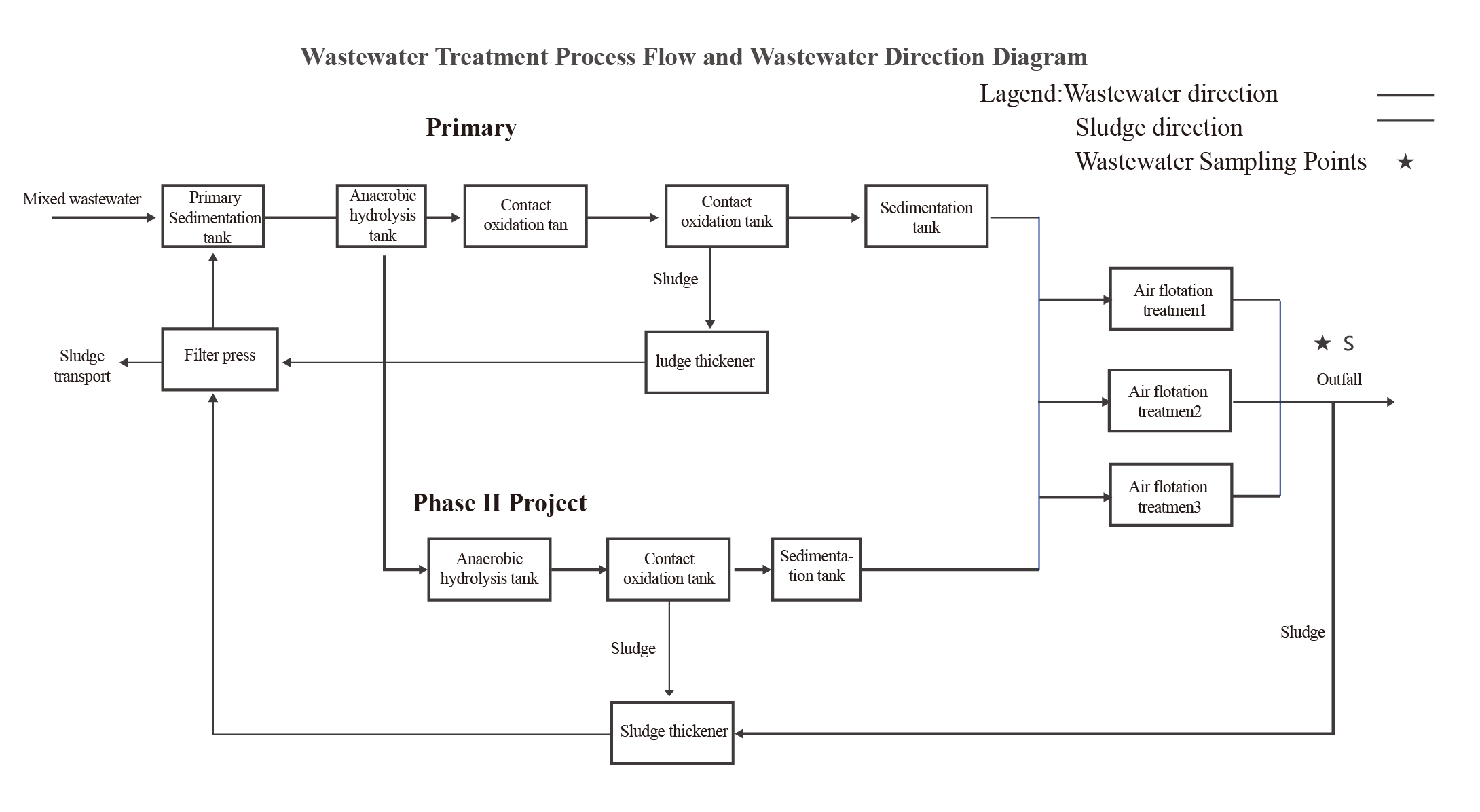
We have set up a wastewater treatment monitoring room in the dyeing and printing factory and installed high-definition video surveillance at the sewage discharge outlet and key nodes of the treatment facilities to achieve 24/7 monitoring without blind spots and ensure that the wastewater treatment process is strictly controlled.
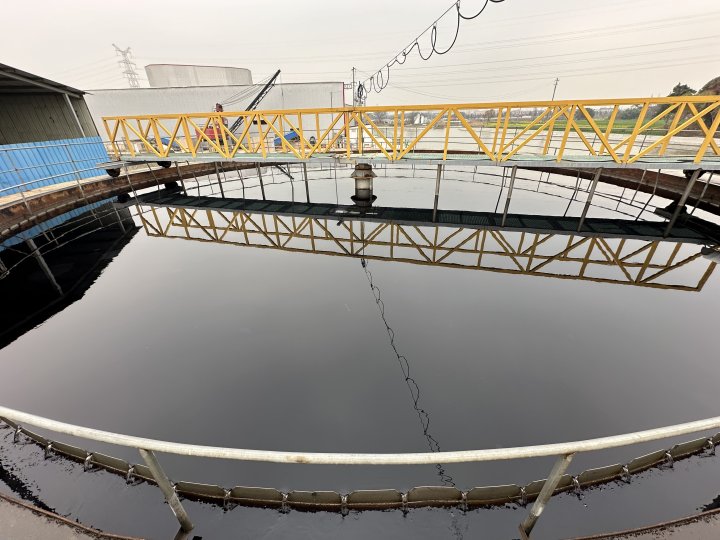
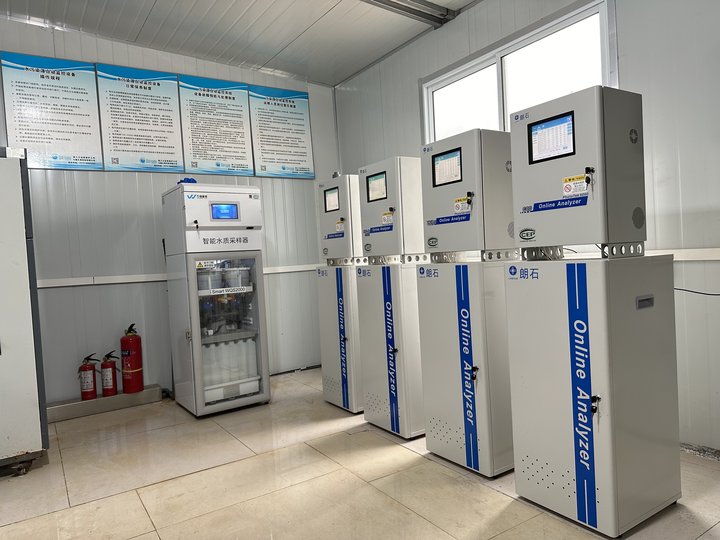

Handa Industries regards waste gas treatment as an important part of green and sustainable development. It has built a modern treatment system of "source collection + intelligent monitoring + standardized operation and maintenance" for waste gas from dyeing and printing production and daily operation.
Regarding production waste gas, the waste gas from the dyeing and printing process is centrally collected and purified through supporting facilities to ensure compliance with emission standards. All treatment facilities are equipped with online monitoring instruments and high-definition video surveillance, connected in real time to the environmental protection supervision platform, enabling full-process traceability. Meanwhile, regular inspections and professional maintenance ensure the stable and efficient operation of environmental protection facilities throughout the year. Regarding domestic waste gas, kitchen fumes are treated using standard purification devices before being discharged in a regulated manner.
The company commissions qualified third-party organizations to regularly test its exhaust emissions to ensure data accuracy and compliance, and to prevent any exceedances. By 2025, the exhaust gas treatment facilities will be operating stably, and all emission indicators will meet national and local standards. Future...,Industries We will continue to optimize treatment processes, deepen digital supervision methods, and continuously improve our environmental governance capabilities.

| Waste types | Handling method |
General industrial solid waste (waste fabric scraps, waste packaging materials) | After being sorted and collected, the materials are handed over to professional recycling companies for resource utilization. |
Hazardous waste (waste oil from stenter machines, waste dye packaging bags) | Strictly adhering to environmental protection requirements for classified storage, and entrusted to qualified third-party organizations for compliant disposal, achieving a 100% compliance rate. |
Household waste and kitchen waste | Strengthen classified management and actively promote the recycling and reuse of packaging materials. |
During the reporting period, the company experienced no environmental pollution incidents, received no complaints about environmental pollution, and was not subject to legal sanctions for violating relevant environmental regulations.
Pollutant Emission Control
Industries have steadily expanded their production capacity and continued to increase product output. At the same time, they have taken multiple measures, including technological upgrades and pollution control facility upgrades, to strictly control pollutant production and emissions. Due to the expansion of production scale, the total amount of pollutant emissions has increased year-on-year, but the pollutant emission intensity per unit product has steadily decreased.
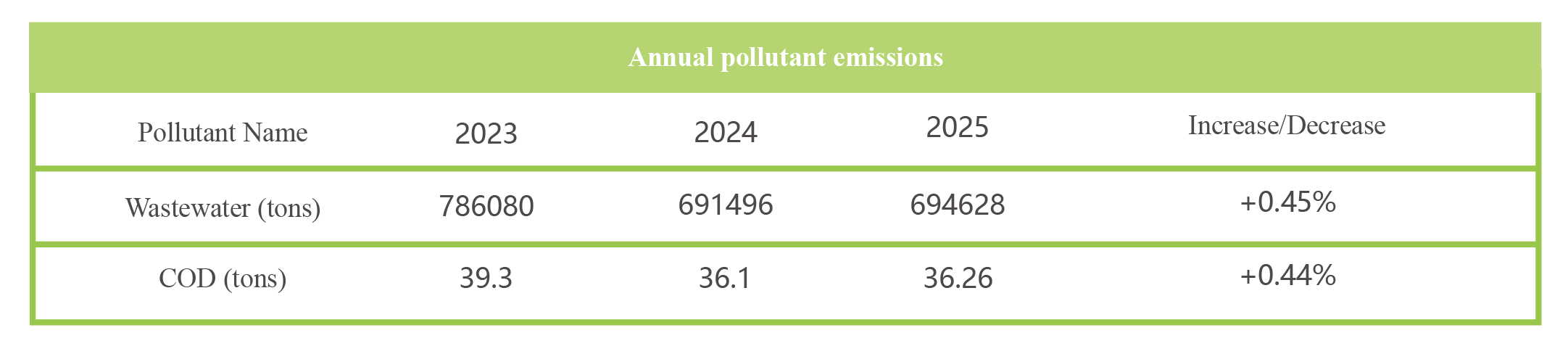
In 2025, we formulated strict environmental protection work goals and control plans, and all indicators were exceeded, with the level of environmental management continuing to improve.
Key Environmental Protection Goals for Dyeing and Printing Factories in 2025 | |||
| Project | Index | Management Measures | Progress by 2025 |
| Wastewater discharge control | 1.Wastewater treatment compliance rate: 100% 2.COD ≤ 200 mg/L, total amount less than 50 tons 3.Total wastewater discharge of less than 1 million tons | 1.Strengthen management and improve wastewater treatment regulations and operating procedures. 2.Standardize testing and process control 3.Configure wastewater flow meters and online detection equipment for real-time monitoring. | 1.Wastewater treatment facilities and monitoring equipment are complete and operate at 100% capacity, ensuring 100% compliance with wastewater discharge standards. 2.COD content does not exceed 200 mg/L.Total amount less than 50 tons 3.Total wastewater discharge694628ton |
Chemical spill prevention | Safe storage and transportation Zero leaks | 1.Chemicals should be stored separately and labeled in a standardized manner. 2.Conduct chemical safety handling training to ensure employees operate in a standardized manner. 3.Take precautions against leakage during transportation and develop emergency plans. | Emergency response plans for chemical spills were developed and protective training was conducted. No chemical spill incidents occurred during the year. |
General solid waste treatment | 100% comprehensive utilization rate | 1. Waste additive barrels and waste packaging bags are recycled by the supplier. 2. Household waste is handled by the local community. 3. Wastewater and sludge will be purchased by a qualified environmental protection company. | Waste additive barrels and used packaging bags are all recycled by the supplier to the company, and the community regularly comes to the company to clean up household waste; sludge is collected by an environmental protection company and sent to the power plant for harmless incineration. |
Hazardous waste treatment | Compliance handling rate100% | Waste oil from stenters, waste dye packaging bags, and other hazardous waste are all collected and disposed of by qualified companies | Hazardous waste disposal compliance rate is 100%, management records are standardized and complete, and the entire process is traceable. |